Skip to content

There comes a moment in every high achiever’s life when the drive, the ambition and the constant forward motion suddenly stop feeling empowering and start feeling hollow. Maybe you’ve felt it recently. You’re still performing, still achieving, still meeting expectations… but somewhere deep inside, you whisper: “This doesn’t feel like me anymore.”
If you’ve ever experienced this quiet discomfort – this subtle but persistent gap between who you are and who you think you’re supposed to be – you’re not alone. You’re simply at the beginning of a self discovery chapter.
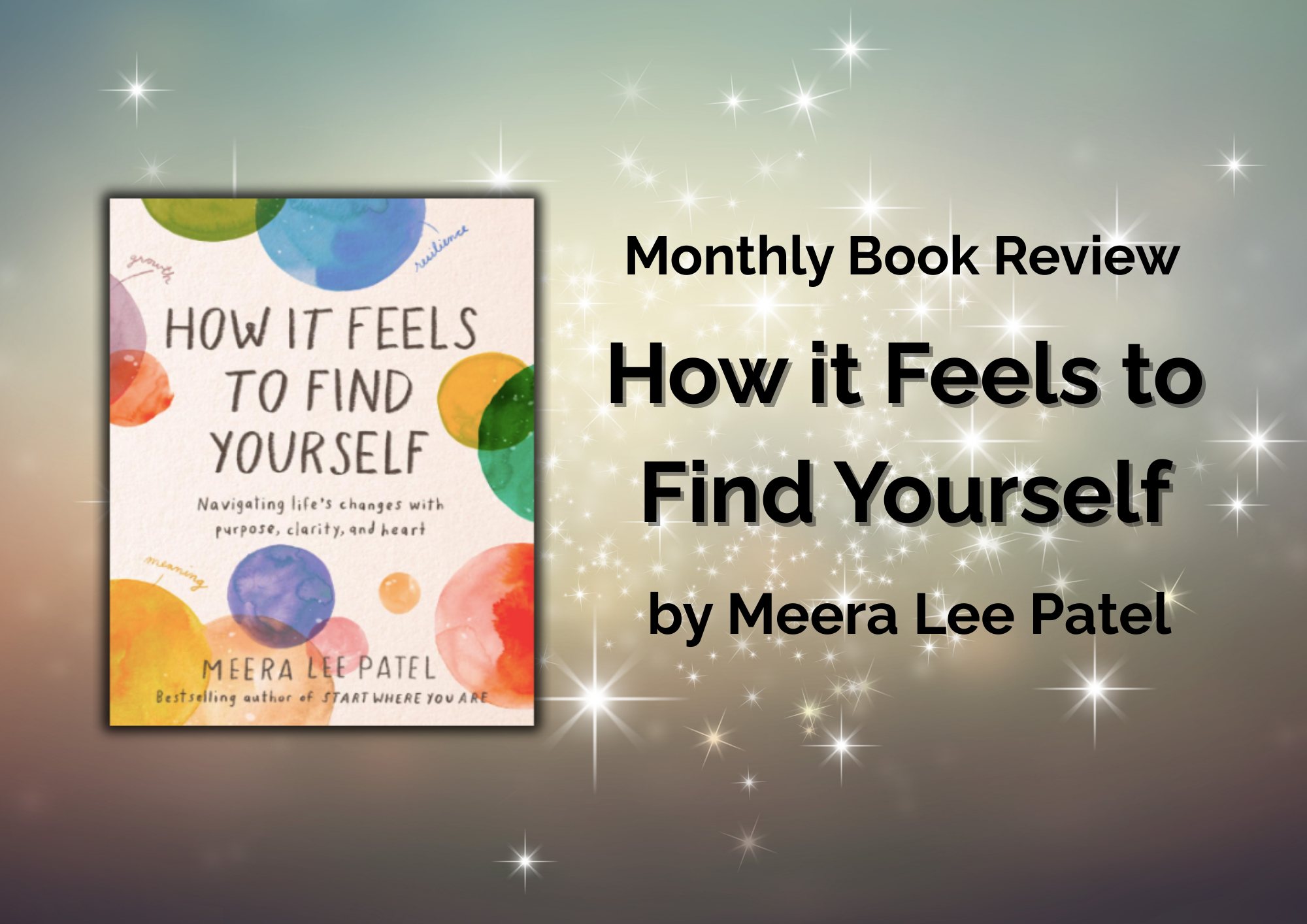
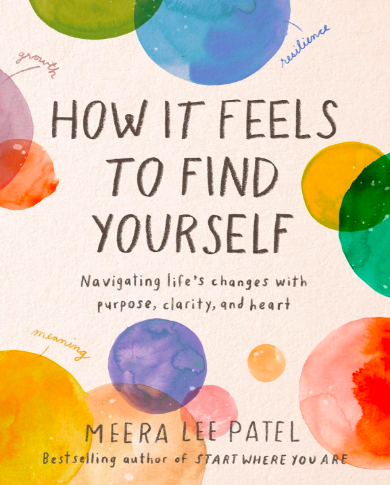
That’s why this month’s read is 👉 How It Feels to Find Yourself by Meera Lee Patel. It’s not a traditional mindset manual. It’s not packed with productivity hacks or strategies for becoming “better.” Instead, it’s a beautifully honest book about slowing down, turning inward and allowing yourself to evolve without guilt.
If the words “Find Yourself” have been echoing in your mind lately, this book may be the perfect companion for where you are right now.
Quick note: This post contains affiliate links and I may earn a small commission at no extra cost to you. It helps support this blog and allows me to keep creating valuable content and tools for your journey. So thank you!
✍️ About Meera Lee Patel – The Author Behind the Book
Meera Lee Patel is an artist and writer known for her ability to take overwhelming concepts such as identity, belonging and emotional healing and make them feel safe and deeply human. She has a gift for turning complex emotions into something readers can breathe through rather than feel intimidated by.
Her books blend reflective essays with her signature art style, creating a calming and grounding experience. Patel’s writing feels like a conversation with a close friend who has already walked through the storm. She doesn’t lecture, she simply reaches out her hand and invites you to understand yourself more gently.

🧩 Core Message: What How It Feels to Find Yourself Teaches About Self Discovery
At its core, this book teaches one powerful truth:
Finding yourself is not an event. It’s a process.
It’s not a single moment of clarity or a sudden breakthrough. It’s a continuous series of small choices — to pause, to notice, to trust and to let go of what no longer fits.
Patel explores the emotional landscape of personal transition:
- the moments when your identity feels blurry
- the discomfort of being “in-between selves”
- the sadness that comes from letting go
- the confusion of not knowing what’s next
- the relief that comes when you finally stop forcing clarity
She validates something many top performers never say out loud: You can have a good life on the outside and still feel lost on the inside. And that doesn’t make you ungrateful or dramatic, it makes you human.
💡 Top Lessons on Finding Yourself and Embracing Self Discovery
1. Losing Yourself Happens When You Outgrow Who You Used to Be
Patel challenges the idea that “losing yourself” is a mistake. Instead, she reframes it as a natural sign of growth.
You outgrow dreams.
You outgrow versions of yourself.
You outgrow environments, beliefs, relationships and expectations.
This isn’t failure, it’s evolution. When something inside you says, “I don’t feel like myself,” it usually means the old identity can no longer contain the person you’re becoming. This can be a wake-up call to shift from performance-mode to presence-mode.
2. Self Discovery Takes Slow, Consistent Attention, not Intensity
High achievers are used to pushing. But the truth is, you can’t push your way into clarity. Finding yourself requires softness: quiet mornings, honest reflection, stillness and uninterrupted space to feel.
Patel reminds us that your identity unfolds gradually.
You don’t “fix” your confusion; you tend to it.
You don’t rush your healing; you respect it.
This is emotional rewiring for high achievers who are used to speed.
3. Listening to Your Emotions Is the First Step Toward Finding Yourself
One of the most powerful lessons in the book is that emotions hold direction.
If you feel discomfort, it’s pointing to something misaligned.
If you feel envy, it’s pointing to something desired.
If you feel fear, it’s pointing to something meaningful.
Instead of pushing feelings away, the author encourages sitting with them long enough to understand what they’re trying to say. This alone can dramatically shift how you experience your life.
4. Real Change Requires Letting Go, Even When It Hurts
Patel writes beautifully about how painful it can be to release old identities, even when they no longer fit.
Letting go can feel like failure.
It can feel like starting from scratch.
But often, it’s the exact step you need to take in order to move into a life that feels like home.
This lesson resonates deeply with high achievers who cling to roles, accomplishments or personas for security.
5. Creativity Helps You Reconnect With Your Inner Voice
Whether or not you consider yourself an artist, Patel shows how creative expression like writing, drawing, journaling, photography, movement becomes a mirror for your inner world.
Creativity reveals stories and desires you’ve been ignoring. It gives shape to feelings that words can’t hold yet. It becomes a tool for finding yourself without forcing insight.
6. Seasons of Transition Are Not Straight Lines
Patel normalises the fact that self discovery is messy.
Some days you’ll feel clear. Some days you’ll feel lost again. And some days you’ll feel both.
The journey is cyclical, not linear.
Understanding this reduces resistance and helps you trust the process even when clarity fades.
7. Relationships Shift When You Change and That’s Healthy
A major theme in the book is that as you evolve, your relationships naturally recalibrate. Some deepen. Some loosen. Some end. This isn’t something to fear, it’s a sign that you are stepping into alignment.
High achievers often stay in relationships out of obligation, Patel gently reminds us that change is not rejection, it’s growth.
8. One of the Book’s Most Grounding Reminders:
“To find yourself, you must be willing to be with yourself, even when it’s uncomfortable.”
This alone could be the mantra for an entire season of your life.

🙋🏻♀️ Why This Book Speaks to Ambitious People Trying to Find Themselves
High achievers often lose themselves quietly. Not dramatically. Not suddenly. But slowly, under layers of expectations, commitments, responsibilities and unspoken pressure to “keep going.”
This book resonates because it validates experiences such as:
- achieving goals that no longer feel meaningful
- feeling disconnected from your identity
- performing success rather than experiencing it
- burnout disguised as “motivation”
- imposter syndrome during seasons of change
It teaches you that ambition doesn’t need to disappear. It just needs to soften long enough for you to hear your own voice again. This book brings humanity back to ambition, that’s soft ambition in its truest form.
✨ How to Apply These Lessons in Daily Life
Reading a book is one thing, integrating it is another. How It Feels to Find Yourself isn’t meant to stay on your shelf, it’s meant to shift the way you move through your day.
- Notice Your Patterns: Pay attention to moments when you feel disconnected from yourself — in meetings, during conversations or in your alone time.
- Small Daily Pauses: Take 5–10 minutes each day to check in with yourself — your feelings, thoughts and energy levels.
- Experiment Often: Try new routines, boundaries or creative outlets inspired by your reflections. Even small adjustments signal to your brain that self discovery is a priority.
- Reevaluate Relationships & Commitments: Notice what drains or nourishes you. Let this guide decisions about your time and energy.
The key is consistency, not intensity. Applying these lessons gradually will help you find yourself in action, not just on the page.
📚 Final Thoughts: Why How It Feels to Find Yourself Belongs on Your Shelf
If you are in a season where you crave meaning, clarity or reconnection, 👉 How It Feels to Find Yourself will feel like a warm hand on your shoulder. This book doesn’t promise quick transformation, it promises honesty, permission and emotional space.
It reminds you that your life doesn’t have to look perfect to feel aligned. It shows that growth is not a straight line. And it teaches that the most important relationship you’ll ever have is with yourself.
This is the kind of book you read slowly, revisit often and carry with you through every major life transition.
📥 Download Your Free Book Reflection Worksheet
I created a beautifully designed 1-page free book reflection worksheet to accompany this post, crafted to help you slow down, reflect and integrate the insights of How It Feels to Find Yourself into your daily life.
This worksheet will guide you to:
- Capture meaningful insights from the book that resonate with your current journey.
- Answer three reflective prompts that help you reconnect with your inner voice and notice what matters most.
- Highlight a quote or idea that inspires you to trust yourself and your personal path.
✨ Download your free printable worksheet using the button below and begin turning reflection into real-life self discovery, one gentle step at a time.
✨ Missed Last Month’s Pick?
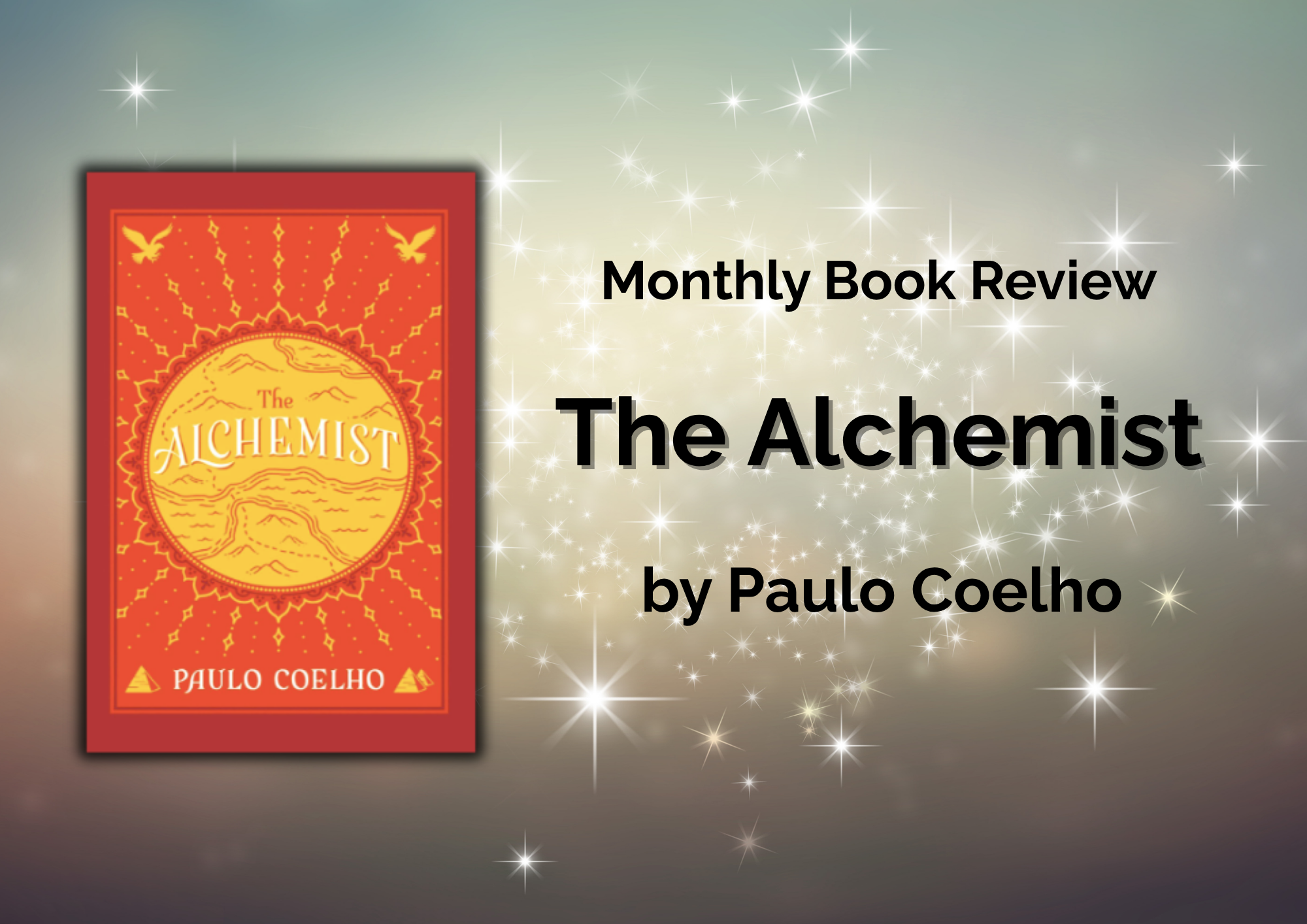
If you loved the themes of self discovery in How It Feels to Find Yourself, you might enjoy revisiting last month’s book, The Alchemist by Paulo Coelho. It’s a timeless story about following your personal legend, trusting the journey and discovering meaning along the way. FREE Book Reflection Worksheet included!